Letter from Mideast: Living in Tripoli's house of fear

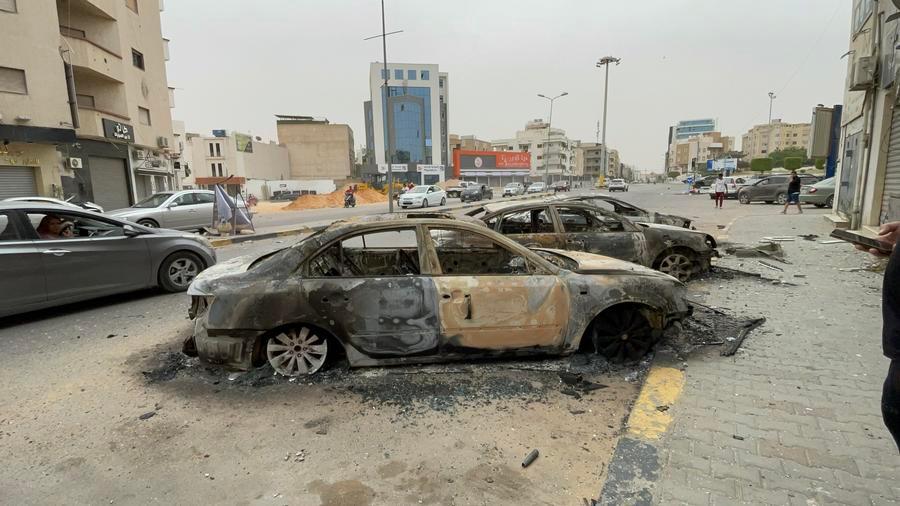
Fourteen years after the fall of Muammar Gaddafi, Libya's capital still cannot breathe easily. NATO's 2011 military intervention failed to bring us peace or prosperity. Instead, it ushered in a long period of political division and insecurity.
by Abdulrahman Al-Bakoush
TRIPOLI, Dec. 13 (Xinhua) -- Drones hum overhead. Gunfire cracks through the air, punctuated by the deeper thud of artillery. In Tripoli's neighborhoods in Libya, fear has become architectural -- embedded in bullet-riddled walls, suspended in the dust from crumbling buildings, and amplified in the cries of children jolted awake by each explosion.
Fourteen years after the fall of Muammar Gaddafi, Libya's capital still cannot breathe easily. NATO's 2011 military intervention failed to bring us peace or prosperity. Instead, it ushered in a long period of political division and insecurity.
The persistent rift between the western-based, internationally recognized Government of National Unity and the parliament-backed administration in the east has deepened the security vacuum and stalled the economy, while foreign military interventions have prolonged the conflict, deepening the suffering of ordinary citizens.
State institutions have collapsed. Militias have multiplied. Water runs dry. Hospitals lack supplies. Power cuts are routine, so are school closures. Prices soar while the currency sinks. Salaries arrive late, if at all.
At a modest home, about 10 km from downtown Tripoli, I sat with 46-year-old Mustafa Mohammed Al-Misrati, a father of three. He looked much older than his age, his face worn by fatigue.
He quietly pointed to a small bag by the front door. Inside were clothes, official papers, and some cash. "It is always ready," he told me. "If there is an attack or a bomb, we must run. But where? All of Tripoli feels unsafe."
As we spoke, he kept glancing at the street, measuring every sound for danger. His three children -- 15-year-old Elias, 13-year-old Abdullah and 12-year-old Mohammed -- sat nearby, fidgeting. Mustafa explained how their nights were shattered by sudden shocks. "Every artillery blast wakes them instantly. Their grades have begun to decline. Panic has become normal."
"My children beg me not to go to work. If I stay, we have no income. If I go, they fear I won't return," he added.
A few kilometers south, in the Ain Zara neighborhood, I met 26-year-old Ahmed Jamaa Qrein. His bruises told his story before he even spoke.
On Aug. 27, he was abducted near a checkpoint by armed men he thought he could trust.
"They blindfolded me and accused me of belonging to the 444 Brigade," he told me in a faltering voice, rolling up his sleeve to show fading marks from the beating. And his left eye remained swollen, carrying the memory of hours of torture.
"I kept repeating, 'I am just a citizen, I have a mother and brothers waiting for me,' but they did not listen," he said. When his family finally secured his release, what the gunmen offered was a cold dismissal: "Just a suspicion. We found nothing on him."
Walking away from Ahmed's house that evening, the air felt heavier. It was clear to me that every family in Tripoli carries its own version of Mustafa's bag or Ahmed's bruises. Some prepare to flee at a moment's notice. Others endure wounds after captivity. Together, they paint a city where daily life has been replaced by a constant struggle for survival.
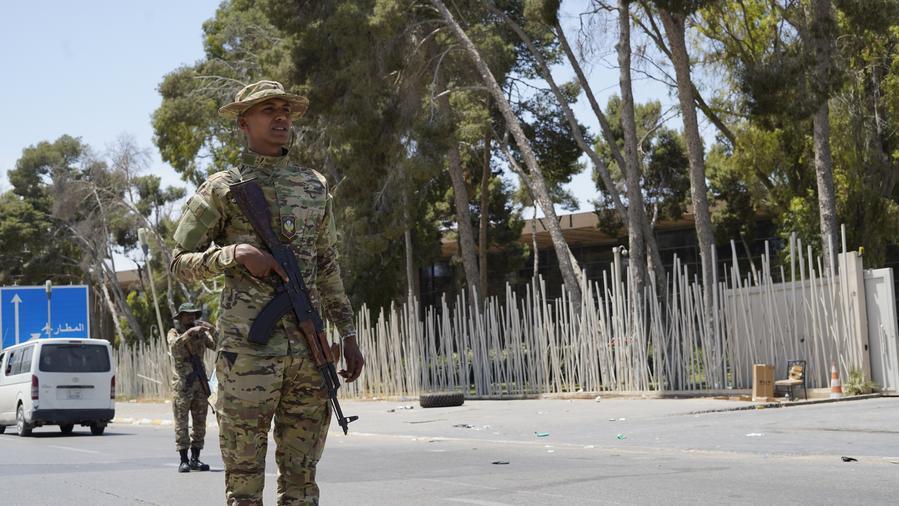
This predicament has plagued the country for 14 years. What do the political elites make of it? Do they see a way out, or at least a role they could play in addressing it?
To find out, I spoke with Assad Zahio, head of the National Rally Party and a presidential candidate in the December 2021 elections, which were later postponed. In his office, he tied the suffering of the people directly to the lingering political stalemate and ill-fated foreign interventions.
Meanwhile, "reliance on oil, pervasive corruption, and political division have all led to economic collapse, social disintegration, armed conflicts, and the spread of militias outside state control," he said.
"Citizens are the greatest victims. The people are exhausted by war. They want peace," he stressed. "The way forward is through unifying sovereign and security institutions, forming an effective government to oversee free and fair elections, applying transitional justice, and holding the corrupt accountable."
He also stressed the role of civil society and international support. "Libya must actively promote dialogue and reconciliation, support youth and women, and assist displaced and conflict-affected communities. The international community should remain neutral, supporting institution-building, disarmament programs and local development projects to improve citizens' livelihoods."
As I left his office, his words echoed in my mind: division has turned Libya into a house of fear, where the daily struggle is simply to survive, and stability seems out of reach.
Whether Mustafa, Ahmed, or Zahio, they all yearn for a Libya that can step out of this house of fear -- a country where justice is upheld, dignity preserved and stability restored.
I don't know when that day will come. I just hope that the gunfire, shelling and hum of the drones would stop soon, and no one would have to have a packed bag by the door anymore. ■







Comments