Xinhua Headlines: What to watch at China's "two sessions" as new five-year plan begins

* The fourth session of the 14th National Committee of the Chinese People's Political Consultative Conference is scheduled to commence on Wednesday, one day before the opening of the fourth session of the 14th National People's Congress.
* Lawmakers will deliberate on the central government's annual work report, and review the draft government budget and development plan for 2026. This year, they will also examine a draft outline of the new five-year plan, which will anchor policy priorities until 2030.
* As China enters a fresh planning cycle, the "two sessions" offer a window into how the country aims to advance its high-quality development and sustain the momentum of its reform in an ever-changing global landscape.

BEIJING, March 3 (Xinhua) -- This year's "two sessions" -- the annual meetings of China's top legislature and top political advisory body -- are set to open at a pivotal moment. As the world's second-largest economy embarks on the inaugural year of its 15th Five-Year Plan (2026-2030) period, these gatherings in Beijing will serve both as a review of past achievements, and as a strategic compass guiding the nation's future development.
The fourth session of the 14th National Committee of the Chinese People's Political Consultative Conference is scheduled to commence on Wednesday, one day before the opening of the fourth session of the 14th National People's Congress (NPC).
Lawmakers will deliberate on the central government's annual work report, and review the draft government budget and development plan for 2026. This year, they will also examine a draft outline of the new five-year plan, which will anchor policy priorities until 2030.
This year's legislative agenda is particularly robust, signaling a focus on long-term institutional development. NPC deputies are set to deliberate on three important pieces of legislation covering areas including the environment, ethnic unity, and national development planning. China's top legislator, top political advisor, chief justice and top procurator will also present work reports.
Beyond the plenary meetings, ministers and heads of various government departments as well as national legislators and political advisors will hold press conferences, where they will elaborate on policies related to the economy, social development, and foreign affairs to domestic and foreign media.
As China enters a fresh planning cycle, the "two sessions" offer a window into how the country aims to advance its high-quality development and sustain the momentum of its reform in an ever-changing global landscape.
Outlined here is a selection of highlights at this year's "two sessions."

NEW PLANNING CYCLE
In China's governance system, five-year plans function as strategic frameworks for economic and social development. As lawmakers review the draft outline of the 15th Five-Year Plan, they are effectively setting priorities that will guide fiscal policy, industrial transformation and social progress through 2030.
This new cycle is beginning on solid ground. The 14th Five-Year Plan period came to a close with China's economy surpassing 140 trillion yuan (about 20 trillion U.S. dollars) in 2025.
International media outlets have noted that key targets, including economic growth, labor productivity, research and development spending, urbanization and average life expectancy, broadly met or exceeded expectations during the period.
However, the development environment China now faces is increasingly complex. External headwinds, including trade tensions, geopolitical frictions and insufficient global growth momentum, pose a great challenge for China's development. Domestically, China must deftly navigate long-standing structural issues while responding to ever-emerging technological and industrial challenges.
Against this backdrop, the new five-year plan will offer a strategic roadmap -- not merely a list of tasks, but a framework guiding how the country will navigate its development priorities, ranging from strengthening its supply-chain capacity to advancing its low-carbon transformation.

GROWTH TARGET
China's 2026 GDP growth target will be one of the most closely watched numbers at the "two sessions."
Early indicators from provincial-level regions suggest a broad consensus: Expansion remains essential, but it must be anchored firmly in quality and structural upgrading.
In 2025, China achieved its growth target of 5 percent as the country spared no effort to boost domestic demand and innovation, propelling its economy toward structural rebalancing and continuing to serve as one of the most stable and reliable engines for world economic growth.
This year's target, therefore, will align with the country's high-quality development imperative, which centers on fostering new quality productive forces, boosting consumption, upgrading the manufacturing sector, and advancing the green and low-carbon development.
For international investors and trading partners, this focus signals both policy continuity and substantial opportunities.

NEW LEGISLATIONS
Chinese lawmakers are set to deliberate on a draft environmental code, a draft law on promoting ethnic unity and progress, and a draft law on national development planning.
The proposed environmental code seeks to embed the principle of green development more firmly within the rule-of-law framework by systematically integrating and revising existing environmental legislations. It comes at a crucial time -- China has pledged to peak its carbon emissions by 2030.
NPC deputy Zheng Haijin, who is from east China's Jiangxi Province and an expert on the environment, said the "encouraging" environmental code provides clearer guidance for ecological restoration and related sectors.
The law on promoting ethnic unity and progress is intended to strengthen social cohesion and forge a strong sense of community for the Chinese nation, while the law on national development planning will serve as a basic law to regulate the formulation of national development plans and ensure their implementation.

INDUSTRIES OF THE FUTURE
Five-year plans have long been central to how China steers its development, charting its strategic course and laying out blueprint for its future-oriented industries.
In January, the Political Bureau of the Communist Party of China (CPC) Central Committee devoted its first group study session of the year to forward-looking industrial development, underscoring its priority for the new planning cycle.
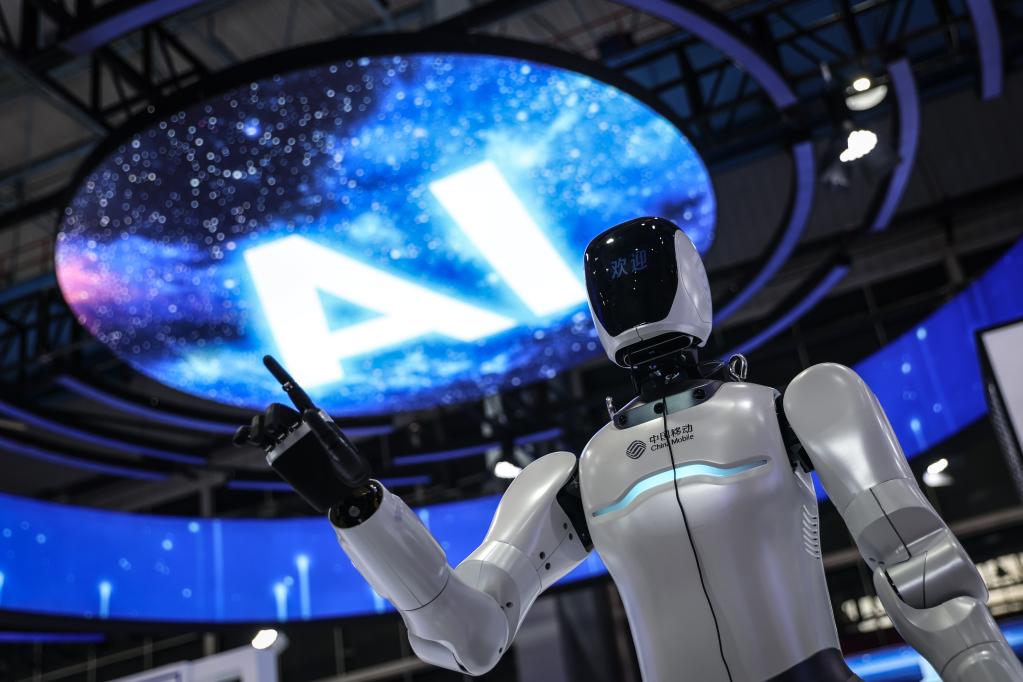
Quantum technology, biomanufacturing, hydrogen and nuclear fusion power, brain-computer interfaces, embodied AI and 6G mobile communications, have been highlighted as new growth drivers in the recommendations for formulating the 15th Five-Year Plan, which were adopted at a key meeting of the CPC Central Committee.
This emphasis on quantum technology in the new plan reflects a shift from laboratory validation to industrial application, said NPC deputy Guo Guoping, a quantum science professor at the University of Science and Technology of China.
The Chinese leadership has urged core technology breakthroughs, as well as a more strategic approach to basic research and the accelerated commercialization of innovation. Greater emphasis is being placed on the role of enterprises -- leading tech firms, in particular -- supported by enhanced fiscal measures, sci-tech finance and talent policies.
These strategic moves are expected to be high on the agenda of this year's "two sessions," as lawmakers and political advisors map out pathways to secure long-term development momentum.
MESSAGES TO THE WORLD
China's "two sessions" have long served as a window into the country's external stance. When Foreign Minister Wang Yi met with the press during last year's "two sessions," he answered 23 questions from Chinese and international journalists covering a wide range of topics from major-country ties to global governance.
Certain themes stood out, with mentions of "cooperation," "openness" and "multilateralism" recurring throughout. The prominence of references to "the Global South" and "a community with a shared future" highlighted partnership and multilateral coordination.
During this year's "two sessions," regional hotspot issues, such as the latest escalating military conflict in the Middle East and the strained diplomatic ties between China and Japan, are set to be in the spotlight.
The year itself carries weight, as 2026 marks the 70th anniversary of the start of diplomatic ties between China and African countries. China will also hold the 33rd APEC Economic Leaders' Meeting in November.
For investors and governments alike, China's positions on international relations will be watched particularly closely during this year's "two sessions" amid a rapidly evolving and increasingly complex global landscape.

(Video reporters: Ma Yunfei, Gui Tao, Huang Haoran, Liu Meizi, Guo Chen and Tian Ying; video editors: Liu Ruoshi, Zhu Cong and Wang Han) ■


